Trades in Stock Options. Receive daily trade recommendations. Can you imagine discovering a way to trade that promises instant income? If you think such a method is impossible, think again. It is definitely achievable, and everything you need to know is available online for one low price that includes special three-part online webinars.
Ambush is a time-proven mean-reversion day trading System focused on a variety of Futures markets around the globe. With Ambush Signals you can now easily follow the Ambush System on a subscription basis for educational purposes.
If you didn't fail early in your trading business, then you have probably been around long enough to realize that many of the problems you encounter as a trader are those that derive from your own individuality. Such problems are common among traders and, in fact, common among all human beings. Seeking spiritual help from a power much greater than your own is the area I address in the "Spiritual Side of Trading".
Chart Scan with Commentary - The Secret of Reduced Margin Spreads
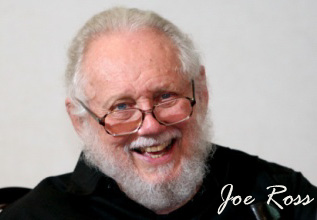
by Master Trader Joe Ross
Author, Trader, Trading Mentor, and Founder of Trading Educators, Inc.
One of the best kept secrets in trading is that of reduced margin spreads. You cannot name many ways to trade that provides more safety or a greater return on margin than does a reduced margin spread, while also being one of the least time- consuming ways to trade. Have you ever asked yourself why it is that many of the largest, most powerful traders trade spreads? I’m going to show you why!
WHAT IS A REDUCED MARGIN SPREAD?
Because of perceived lower volatility, exchanges grant reduced margins on certain types of spreads. Spreads consist of being long in one or more contracts of one market and short in one or more contracts of the same market but in different months—an Intramarket spread; or being long in one or more contracts of one market and short one or more contracts of a different market, and in the same or different months—an Intermarket spread.
DISTORTIONS ABOUT SPREADS
There are some distortions about spread trading that need to be dispelled. If we get them out of the way, I can show you the tremendous advantages spread trading has over any other form of trading.
It is said that spreads do not move as much as outright futures. I agree 100% with that statement. However, I believe that spreads trend much more often than outright futures, they trend much more dramatically than outright futures, and they trend for longer periods of time than do the outright futures. For these reasons you can make much more money with spreads than with the outrights.
The second distortion about spread trading goes like this: “You have to pay double commissions when you trade spreads.” Yes! You have to pay two commissions for every spread you enter in the market. So what? You are trading two contracts instead of one. You pay two commissions because you are trading two separate contracts, one in one place and the other in an entirely different place. Paying two commissions for two separate trades is hardly unfair. Let me tell you what is unfair—paying a round turn commission for an option that expires worthless. Why don’t you hear people complaining about that? You pay for a round turn, and you receive only half a turn. Doesn’t make a lot of sense, does it?
ADVANTAGES OF SPREAD TRADING
There are so many advantages to trading reduced margin spreads that I hope I don’t run out of room here before I can tell you all of them. Let’s begin with return on margin, i.e., yield.
Yield: As I write this, the margin to trade an outright futures position in crude oil is $4,725, whereas a spread trade in crude oil requires only $540, only 11.4% as much. If crude oil futures move one full point, that move is worth $1,000. If a crude oil spread moves one full point, that move is worth $1,000. That means either a 1-point favorable move in crude oil futures or a 1-point favorable move in a crude oil spread earns the trader $1,000. However, the difference in return on margin is extraordinary: In the futures the return is $1,000/$4,725=21%. For the spread, the return is $1000/540=185%. Think about that!
Leverage: This leads us to the next benefit of spread trading—with the same amount of margin, you could have traded 4 soybean spreads instead of one soybean futures. How’s that for leverage? Instead of making $250 on a five-point move, you could have made $1,000. Reduced margin spreads offer a much more efficient use of your margin money.
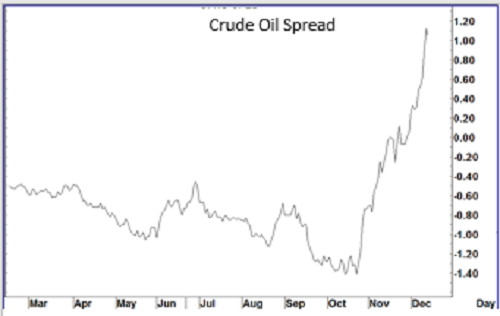
Trend: Earlier I said that spreads tend to trend much more dramatically than outright futures contracts. Not only that, but they trend more often than do outright futures. I don’t have room here to show you the dozens of sharply trending spreads that can regularly be found in the markets, so we’ll have to settle for a recent one. You’ll have to take my word for it that this sort of trending happens frequently when trading spreads.
Opportunities: Because spreads tend to trend more often and more dramatically than do outright futures contracts, they offer more opportunities for earning money, and they do so without the interference and noise caused by computerized trading, scalpers, and market movers. Spreads avoid the “noise” in the markets. There are numerous reduced margin spread opportunities, enough to keep almost any trader busy. And it is the lack of interference by market makers and shakers that leads us to one of the most important advantage of trading spreads, whether they be reduced margin or full margin.
Invisibility: One of the primary problems with any kind of trading in the outrights, whether it be in futures or stocks, is that of stop running. The insiders love it when they can see your order. Even when your entry or exit is held mentally, they know where it is. They are keenly aware of where people place their orders. That is why they love Fibonacci and Gann traders. They know precisely where those people will place their orders. The same is true for anyone who uses one of the more commonly known indicators. The insiders fade moving average crossovers, and so-called overbought and oversold—regardless of which indicator is used to show either of those conditions. They know when prices have reached the outer limits of the Bollinger Bands, and they know the location of supposed support and resistance, etc. But with spreads, they have no idea of the location of your orders. You are long in one market and short in another. Your position is invisible to the insiders. They can’t run your stop, because you don’t have one. You cannot place a stop order in the market when trading spreads! Your exit point is entirely mental; it exists exclusively in your head. In that respect, spread trading is a purer form of trading. It is the closest thing in trading to having a level playing field. Could that be the reason you hardly ever hear about spread trading?
Liquidity: Attempting to trade in “thin” illiquid markets is one of the surest ways to encounter serious stop running and bizarre price movements. However, other than occasional problems with getting filled, spread trading does not suffer from a lack of liquidity—which in itself creates more trading opportunities. I would never consider taking an outright position in feeder cattle. Feeders are a thin, illiquid market normally best left to professional interests. But a reduced margin (feeder cattle)-(live cattle) spread is something I look for all the time. Some of the moves in this particular spread are incredible. They are worth hundreds and even thousands of dollars per spread, several times a year. They are highly seasonal in nature due to the birth and growth cycles of cattle. The same thing is true of spreading both live and feeder cattle against lean hogs. These spreads are seasonal, which brings us to the next great advantage to spread trading - seasonality.
Seasonality: Whereas seasonality doesn’t always take place as planned, i.e., seasonality can come early, late, or not at all, but when it is happening, you can see it. It is obvious when a seasonal trade is working as expected. Seasonality is not subject to the whims of man. Seasonality is one of the strongest reasons for trading spreads. Crops are planted within a given period of time. Calves and piglets are born according to their birth cycle and they grow according to their growth cycle. Even futures based on financial instruments are seasonal, and many of them offer reduced margin spreads.
Inversion: Along with seasonality comes the huge profits that can be made when an underlying market become inverted (goes into backwardation). This is true for any agricultural commodity as well as any financial instrument. I don’t have space here to explain inversion, but when it occurs, which is commonplace, the spread between front and back months can widen tremendously, thereby offering marvelous profit-making opportunities to the spread trader. As if that weren’t enough, the same opportunity becomes available when the period of backwardation ends and the relationship between front and back months returns to normal.
Probabilities: If we eliminate those trades in the outrights in which you get yourself whipsawed in a sideways market and maybe win or lose a little, the actual odds of winning on any trade is 50%. If you are long and prices move down, you lose. Conversely, if you are short and prices move up, you lose. It doesn’t matter how accurate is your trade selection, the bottom line is that your chances of being right once you enter a trade are one in two. However, when you enter a spread you are not primarily concerned with the direction of prices. Your primary concern is with the direction of the spread.
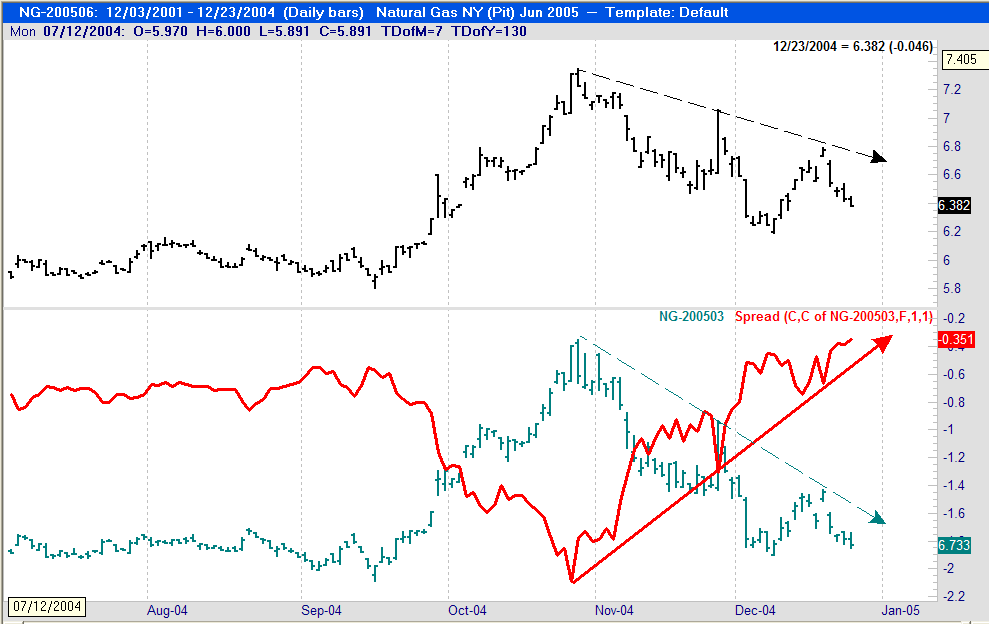
With a spread you can make money when both legs of the spread are moving up, both legs are moving down, when both legs are moving sideways but one more so than the other, or best of all, when the leg you are long is moving up and the leg you are short is moving down! As long as the leg you are long is moving better than the leg you are short, you will have a winning trade. There is only one situation in which you can lose with a spread, and that is to be dead wrong about both legs. So with a spread you can win even if you were wrong about the direction of price movement, as long as you’re not too wrong. The chart gives you an idea of what I’m talking about. Both months of this natural gas trade were moving down, but the spread was widening and moving up.
(Source Genesis Financial Data Systems)
There are additional opportunities in spread trading, including spreads that require full margin. You can trade spreads with stock indexes, sector funds, and single stock futures. Did you know you can daytrade stock index spreads? These are topics for another day and another time.
Unfortunately, either by accident or design, much of the truth of spread trading has been lost over the years. There are many more aspects to it than I have touched on here. Furthermore, there are some wonderful and inexpensive tools available that make spread trading a delight. Spread trading is one of the most relaxed ways to trade. It rarely takes more than 1-2 hours of your time each day, and more often than not, we are talking about only minutes per day to seek out and trade the wonderful opportunities that are available in reduced margin spreads.
Now that I’ve told you about spreads, my secret is no longer a secret.
Developer: Joe Ross
Administration and New Developments: Philippe Gautier
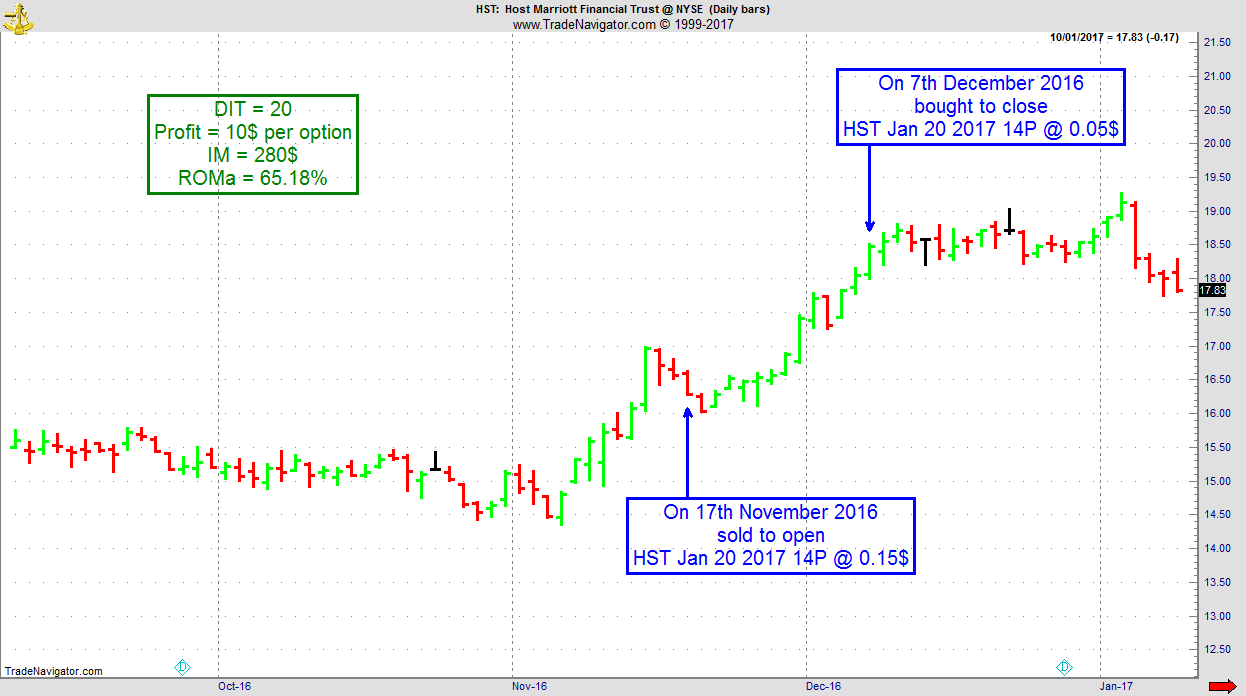
On 16th November 2016 we gave our IIG subscribers the following trade on Host Marriott Financial Trust (HST). We decided to sell price insurance as follows:
On 17th November 2016, we sold to open HST Jan 20 2017 14P @ $0.15, i.e. $15 per option sold, with 63 days to expiration, and our short strike below a major support zone and 18% below price action, making the trade very safe.
On 7th December 2016, we bought to close HST Jan 20 2017 14P @ $0.05, after 20 days in the trade, for quick premium compounding.
Profit: $10 per option
Margin: $280
Return on Margin Annualized: 65.18%
This trade was suitable for small accounts.
We have also added new types of trades for our IIG daily guidance since 2016, "no loss" propositions with unlimited upside potential, still using other people's money to trade.
One of the lessons I learned the hard way in trading is that to become and to stay successful as a trader, you have to be very open-minded. Unfortunately, this is easier said than done and many traders fail to stay open-minded in the long run.
This is a very common trap for traders you're having success early in their trading career. Maybe you started trading back in the early 90s when the stock markets moved from one high to the next. You learned a very simple long-only strategy to trade stocks and of course, you were very successful doing that. But in the year 2000 everything changed and that super bull markets turned into an ugly bear market. A completely new environment to trade in and guess what your long-only trading strategy stops working. But as you've been making nice money with it for almost 10 years it's very hard to stop trading it. On every little profit you make, you start hoping it might work again. But as the stock markets continue to collapse, so does your equity.
That trader can hardly be blamed for not being open-minded enough to see that and stop trading the strategy before it's too late. It's a very difficult thing to do. And that's why most traders who've had a very good start usually give it all back to the markets later on.
But there are also traders who've been around for a while that should know better by now. Still, they believe that only one way of trading is right and try to stick to it forever, happily ignoring all the facts telling them the opposite. Often, they're the ones who love hanging out in trading forums to tell everyone the truth about trading. Whenever someone wants to tell you "the truth about the markets", run as fast as you can!
If there is a truth in trading and the markets, it can be summarized in "it changes all the time". Whenever you think you've seen it all, something new happens. Truths like "bonds and stock market are highly correlated" simply become untrue. Whole markets become illiquid or disappear. Trading costs is another factor that can make markets untradeable (or tradable) for a specific strategy. And of course, market participants change all the time.
Because of that, trading strategies that worked for years can simply stop working. It will be very interesting to see what happens to many traders/strategies/hedge funds that are currently relying on some kind of long-only stock market strategies when things become ugly again.
So that's one of the reasons you have to stay flexible and open-minded in this business. Markets change. If you don't adapt, you won't survive.
But you also need an open mind to be successful in developing trading strategies and looking for market edges. Very often you'll find that the very opposite of what you believe or read in a trading book is actually true. But you won't find that out if you're not ready to challenge what you believe to the true right now. Is a certain chart pattern that is categorized as "bullish" all over the internet actually "bullish"? Or might the truth be that chances of success are much higher fading that signal? Go ahead and find out!
Also if a strategy looks like the worst strategy ever, maybe it's going to be a good one if you do the opposite? The same is true for indicators, think of new ways to use them. Maybe it's actually meaningless if an indicator hits a specific value where it's supposed to be "overbought" but it's an excellent indicator to show a change in momentum by looking at its change from one period to the next?
Other things traders tend to get attached to are specific markets or trading styles. "I trade only the EUR/USD and I never hold a trade overnight". Good luck with that! This means you'll hit some very serious drawdowns (or have to completely stop trading if you have a filter for that) whenever the volatility of EUR/USD gets too low to profitably day trade in that market. And these periods can last for years! As this can be true for whole asset groups like currencies, it's always good to be able to switch to wherever the action is (energy markets, bonds, stock indices for example).
Of course, when it comes to the actual execution part of trading, there's no room for you to be open-minded. Here you have to be 100% disciplined and stick to your rules and risk management. If you're open-minded about how much you'll risk on the next trade, you've clearly overdone it :)
To view previous published Chart Scan newsletters, please log in or click on "Join Us,"
shown above, to subscribe to our free "Members Only" section.
A WEALTH OF INFORMATION & EDUCATION:
Joe Ross-Trading Educators' popular free Chart Scan Newsletter has been published since 2004.
Note: Unless otherwise noted, all charts used in Chart Scan commentary were created
by using Genesis Financial Technologies' Trade Navigator (with permission).
Legal Notice and Copyright 2017 Disclaimer - Published by Trading Educators, Inc.
Chart Scan is a complimentary educational newsletter.
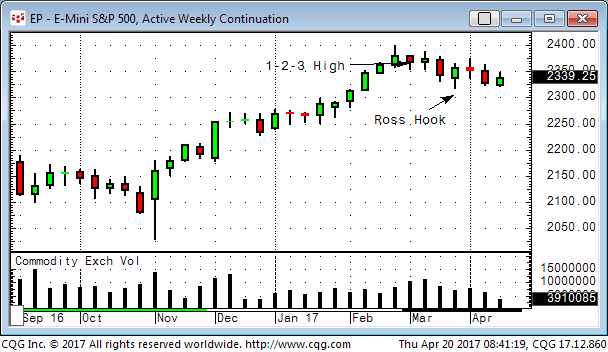
When we look at the ES on the weekly chart we notice the completed 1-2-3 high formation in March and we see the possible Ross Hook to the down-side.
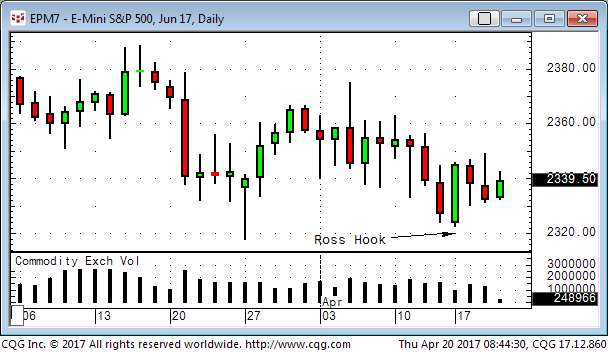
When we look at the daily chart we see, that we also have a Ross Hook to the down-side as well and therefore a short entry might make sense.
How to manage the entry and the trade depend on what time frame you use for your trading, but an idea could be to use 30- or 60-minute charts to time the entry on a shorter time frame and to reduce the risk. Of course you can use 15-minute or 120-minute charts as well, it depend all on your preferences. A first target could be the March 27 low and if we break lower 2300 could also be possible.
Futures Spread Trading - A Dynamic but Overlooked Aspect Of Trading April 24, 2017 1:00 PM, EDT
Trading calendar spreads and/or inter-commodity spreads is one of the less volatile, more conservative, more reliable ways of trading. Join Andy Jordan, professional trader and trading coach, as he explains and demonstrates the advantages of spread trading and how to use spreads in today’s markets. Andy has been trading futures spreads for more then 15 years and is the “spread guru” at Trading Educators.
Go to our Home Page and scroll down to our "Register Today" button
Chart Scan with Commentary - Planning: A Key to Successful Trading
by Master Trader Joe Ross
Author, Trader, Trading Mentor, and Founder of Trading Educators, Inc.
From time to time I get some very interesting confessions. Here is a very recent one, along with a solution.
“I had been looking at a profitable trade setup all day. I studied indicator after indicator looking for confirmation, even though I know many are correlated and redundant. But I just kept on searching. I thought, ‘Maybe I missed something.’ My account is now so small that I just wanted to be sure that this was the right trade. My thought was that I must take into consideration anything and everything that could cause this trade to fail. I can’t afford to lose any more money. What should I do?”
Like most traders in this kind of situation, there is a need to have the ability to make a decision, but it is difficult to do if the trader is undercapitalized and in the position of making trading decisions out of fear and uncertainty.
Many traders suffer from too much analysis. They are looking at so many things, they can no longer see straight. If a trader keeps on over-analyzing trades, “analysis paralysis” may set in and develop into a deep-seated psychological problem.
Carefully analyzing the possible consequences of trading decisions is healthy, but it becomes unhealthy when it is overdone. When it comes to trading, it’s important to have a clearly defined trading plan. Be as certain as is possible that any given trade is not going to wipe out the trading account. That is one of the reasons we suggest the use of a time stop when trading in addition to a money stop. When using both types of stops they clearly define the signs and signals that indicate a trading plan is not working, suggesting that the trade should be closed out in order to protect trading capital. It is important to realize that a trader might not only be wrong about the direction of prices but that it is also possible to be wrong about the timing of an entry into a market. Either one can end up in a losing trade.
Trading, by its very nature, is uncertain. There is little that can be described as security for traders. Every trade is a new event, and every entry is an entirely new business. A trader does not have the luxury of living from past accomplishments. Each day the business starts over again. You cannot build up a list of faithful repeat customers in this business. The only things that are carried forward are experience and hopefully, lessons learned.
Trading is not for anyone who has an unquenchable thirst for certainty. Uncertainty in trading is co-equal with insecurity. If money represents security to a trader, that trader has a real problem. Most advisors will agree that trading should be done only with money that the trader can afford to lose. Sadly, not many follow that advice. Losing money not only costs the trader financial security, but emotional security as well.
I often tell people that I have mentally divorced myself from the money involved in trading. I often don’t know until the end of the month whether I have won or lost money. I trained myself to think of trading as an endeavor in which I strive to make points. Only later are those points translated to dollars. In that sense, for me trading is making point. As long as I’m making more points than I’m losing, I feel good about my trading. Of course, I keep in mind that when I’m trading in more than one market those points are not always of equal value. I also never lose sight of the fact that trading is a serious business.
Insecurity among traders who over-analyze manifests in a search for the holy grail of trading, desperately seeking the right indicator or the perfect trade setup, as on the chart below. The problem is that even when something that looks good is seen, there is no feeling of certainty that the trade is sufficiently perfect to act upon. Why? Because the real lack is confidence in the ability to trade what may be clearly seen, as well as a lack of self-confidence, and because of fear of the pain of another loss.
I was taught to do my analytical work at a time when markets were not day traded and were not electronic. I had to adapt to the realities of markets as they are traded today.
First, I go through all my charts to get an overview of the markets. During that time, I look for trending markets. Trend lines are sometimes placed on the charts as best I can do them. This action can help me to identify the trend. These days it is easily done with software.
Next, I go through all my charts looking for “against the grain” moves—the intermediate trend that goes against the longer term trend. This alerts me to prices that might soon resume trending.
Then I go through all my charts looking for Ross hooks. I mark each hook with a bright red “h.” This, too, is possible to do with computer software. Then, in light of the size of my margin account, I try to select those markets that appear to have the greatest potential, and I place order entry stops where I have determined I can make a suitable entry. These are resting orders in the market. I try to never miss a pre-hook entry.
How do I know which markets have the greatest potential? The answer is simple. I select those markets that have the strongest trend lines along with the most consistent daily price range—a price-range sufficient for me to take my piece out of the market.
Now there is a trick to this. I don’t want too steep a rise or fall because in a rising market too steep often signals that the end of a move is near. Prices that break out too fast and go straight up rarely give an opportunity for entry before they start to chop around in congestion. If prices have been going up steadily, and suddenly that angle steepens—goes parabolic, prices are giving a warning that the move may soon be over. In down markets I am willing to allow a steeper angle, because often a market will move down a lot faster than it moved up.
What I want most is nicely trending markets that are making a retracement. Then I can attempt an entry as the market retraces.
Sometimes I have to wait a relatively long time before prices begin trending, depending on the time frame I am trading. The only thing that changes is that the shorter the time frame the shorter the wait for prices to start trending. There will usually be at least a couple of markets in a trending condition, but there are times when there are none.
Yet I do my homework every day. The only way to know when an important breakout, the beginning of a trend, might occur is to perform my daily analytical work.
Finally, I will set my work aside and take a break. After a break, when my head has cleared a bit, I will look at my charts again. I will then do my best to come up with a trading plan. I will try to think through what I am going to do. I will ask myself lots of “what ifs.” I try to anticipate what might happen in the market. Often that kind of thinking will cause me to eliminate some of my potential trades.
In this video, Marco talks about another very common trading mistake, and that's trading your P&L instead of the actual market. If you're struggling to become a winning trader, this might be an eye-opener, especially if you're a breakeven trader right now.
To view previous published Chart Scan newsletters, please log in or click on "Join Us,"
shown above, to subscribe to our free "Members Only" section.
A WEALTH OF INFORMATION & EDUCATION:
Joe Ross-Trading Educators' popular free Chart Scan Newsletter has been published since 2004.
Note: Unless otherwise noted, all charts used in Chart Scan commentary were created
by using Genesis Financial Technologies' Trade Navigator (with permission).
Legal Notice and Copyright 2017 Disclaimer - Published by Trading Educators, Inc.
Chart Scan is a complimentary educational newsletter.
Thank you for your feedback on my last article "Having an edge in the markets". Some of you have been brave enough to take that article to the next logical step and ask the question most traders hardly dare to ask.
Here's an email I got: "I have experienced all the things you described. The thing that I always wonder about is how do you know if you have a real trading edge? Every time I have a winning period and then move into a period of drawdown I start asking myself, "Do I really have an edge or am I now just giving everything back because I don't?". Is there a way to have an assurance that your methodology has an edge? Is it possible to have that confidence?"
Definitely, one of the hard questions when it comes to trading. And one that makes most traders feel very uncomfortable for a reason. I myself kind of blanked out each time it came to my mind for years. Why? Probably because I already knew that I wouldn't like the answer too much. And it's much easier to just move on with some magical thinking and decide to "trust in your guru" or "believe what you've read in a book".
But one day every honest trader has to face this, so let's not lose time and dive right into it.
First, let's redefine the question. I'll assume you have read the last article and if you didn't, now is a good time to do so. In the article, we discussed that a casino has an edge at the roulette table, a real edge that is indisputable and 100% real. You can explain it in a few sentences, it has been there 10 years ago and will still be there in 10 years as long as the rules of the game don't change. The house has an advantage, and the owners of the casino can be 100% confident about this.
How's the situation in trading? Are there edges equal to the house advantage of a casino? And the answer is actually yes, here are a couple of examples:
- When most trading still happened in the pits, traders who had a seat at the exchange and were trading directly from the pit had an edge. They could see the big players placing their orders, immediately see/hear/feel when the market started to move and jump on the move early. By the time the retail traders called in their orders to join the trend they could already cash in. Notice that almost all of these successful pit traders failed to make money when they were forced to trade in front of a computer screen without that locational advantage. Many of them are now trading gurus...
- Market makers who were front-running orders. These are almost gone these days in electronic trading, but HFT trading algorithms have actually taken their place. They usually have a very small speed advantage, being a bit closer to the exchanges than everyone else. And a huge part of their game is running the same strategies as the human market makers did back in the days. With smaller amounts but a lot faster and at much higher frequency.
- Arbitrage opportunities, trading the same stock but on different exchanges for example to exploit price differences. This was a really nice edge but the margins got smaller and smaller over the years as the markets became more efficient. Nowadays there still are some opportunities in markets like cryptocurrencies or developing markets in countries that are just opening up to the global world. But they're not easy to find and the profit margins usually are very small.
There's more, but the truth is that all of that kind of sure thing edges I know of are gone or too expensive to exploit for a private trader. One example of this is HFT trading where you need a serious amount of money to get a fast enough connection to the exchanges and super cheap trading costs to make this really work. Unless you have that, HFT trading is a sure way to ruin due to the trading costs you have to pay and getting beaten constantly by faster HFT trading algorithms.
Now let's move on to the kind of edges most of us are looking for on a daily basis. These aren't sure thing edges like the one the casino has. Let's call them speculative edges. One might be that during a certain time of the month's stocks tend to move higher. Or a chart pattern that increases the odds of prices to move in a certain direction. Or a trader who believes he has exceptional gut instincts about where the markets will move. It could also be a specific system/method like the well-known turtle system.
What differentiates all of these speculative edges from the ones we discussed before is that they're always uncertain. A trading method like the turtle system might work for a decade and then stop working. The reason for this might be that too many people are doing the same thing or because the markets change. The same can be said of a chart pattern. Markets, market participants and market relationships change all the time. Some markets even completely disappear. And so do market inefficiencies.
Because of that, truth is you can never be sure if what you believe to be an edge actually still is an edge.
But there are things you can do to increase the odds of an edge being valid and to make this a bit less of an issue.
First of all, don't just blindly believe and bet your money on a chart pattern/method/idea because it's on some website, a trading guru tells you about it or you find it in a magazine/book. I can honestly say that I've looked at most of what's out there in the trading world (for free and expensive/premium products). Truth is that even when you ignore the obvious bullshit it’s very hard to find any real edges in what's on offer out there.
Also just because something sounds logical and reasonable doesn't mean it will actually give you an edge. This is a very common scheme in the trading education world. We all love these little stories and explanations as for other areas of life, this actually works quite well. But not in trading.
Here's an example: "this price pattern shows you clearly that the big players in this market bought at price X, after which prices moved higher very strongly. So the bulls clearly won and the traders who are short have to cover their position once price Y is hit." Sounds logical, makes some sense, could be true right? But all of this is just an interpretation of what everyone can see on a price chart. It doesn't mean that bla-bla actually has any predictive value. The opposite could be as true!
So what to do? I suggest to always backtest and validate any trading idea. Yes, you'll still just look at the past and backtesting has its flaws but it surely puts you ahead of a trader who doesn't backtest at all. If you don't believe in backtesting, simply ask yourself if you would still trade a chart pattern if you'd know that it lost money every year for the last 10 years in the market and timeframe you plan to trade it. I wouldn't and that's why I want to know at least that much before betting my money on an idea.
Backtesting the right way is not easy. You need to learn how to do it as well as possible, knowing it's limitations and flaws. Do your best to avoid over optimizing, make sure your backtest is statistically sound and you have enough trade samples (no, 30 is not enough). Evaluate trading costs correctly and use high-quality historical data. Depending on the strategy, use out of sample validation, walk-forward optimization, cross validations and monte carlo simulations.
If you're doing proper backtesting, you'll be way ahead of all the traders out there who just blindly trade some signal. You'll know a lot more about the possibly good signals and you'll have filtered out tons of strategies that you now know for sure have no edge whatsoever.
Even now though you'll still not know for sure if your strategy really has an edge or not. You've done all you can to strongly improve the odds but it still is a speculative edge and should be treated as such.
That’s why I see trading systems as investments. After having done my research, I might decide to invest in a trading system. And like investing in stocks, I'll diversify as good as possible by investing in multiple systems. This way if some of my systems are actually just "data accidents" that somehow still made it through my strict system development process, it's not going to be a disaster as long as the other systems perform as expected.
I believe that's as close as you can come to a sure thing edge as a speculative trader. Of course, that's not what traders want to hear but it's always much better to know and be aware of what’s true rather than to ignore it.
Happy Trading!
Marco
PS: If you know of any sure thing trading edges out there, please email me, This email address is being protected from spambots. You need JavaScript enabled to view it.!
When it comes to trading it seems that the more you know, the less you know, and the more you become confused.
People have the tendency to believe that the accuracy of their forecasts increases with more information. This is the illusion of knowledge - that more information increases your knowledge about something and improves your decisions. However, this is not always the case - increased levels of information do not necessarily lead to greater knowledge. There are three reasons for this. First, some information does not help us make predictions and can even mislead us. Second, many people may not have the training, experience, or skills to interpret the information. And, finally, people tend to interpret new information as confirmation of their prior beliefs.
Chart Scan with Commentary - Why don’t more people know about spreads?
by Master Trader Joe Ross
Author, Trader, Trading Mentor, and Founder of Trading Educators, Inc.
Could it be that those who are in the know don’t want YOU to know?
Spreads are kind of a strange thing to be writing about in a trading newsletter the goes out mostly to traders who are probably trading everything and anything except spreads. You see, trading spreads on futures contracts is mostly for people "in the know," but there are few who know much about spread trading.
Since spreads can be traded strictly using spread orders shortly after the Open or during the Close, it really doesn’t matter where you live on this planet should you care to take advantage of spread trading. But why would you want to do that? I suppose I’d better answer my own question: It’s because of the many, many advantages spread trading has over every other kind of trading I’ve seen in my decades of trading experience.
It’s truly amazing that people don’t know much about spread trading, and please don’t confuse it with "spread betting", they are not at all the same thing. What’s startling about it is that there is more refined information about trade selection when it comes to spreads than you can find in any other trading venue. With so much great information available about which spreads to enter, you have to wonder why so few people know about spreads.
A spread is the arithmetic difference between the prices of two outright contracts. You simply subtract the one you want to sell short from the one you want to buy long. Technically, you can spread any two contracts you care to, but normally a spread is done between two futures contracts that are in some way related to one another. The reason for using futures to do spreads is that the US exchanges offer substantially reduced margins for trading them.
Trading futures spreads brings you a whole new trading experience. Is there anyone out there who would not want to trade free of any costs for data? It is possible when trading spreads.
Can you imagine situations where even though prices in the underlying are moving sideways, you will be trading a chart that is trending? For the most part, isn’t it the trend where you make the most money? The fact is that spreads trend more steeply, more often, and for longer periods of time than the trends in the outrights. You see when a spread trends, it trends based on reality and not on market manipulation by those able to move prices.
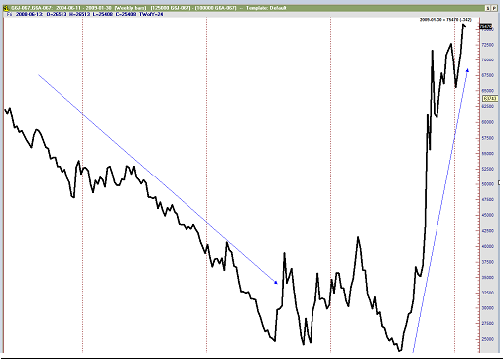
As an example of how long spreads can trend, let’s look at a weekly chart of being long the Japanese yen futures contract for March, 2009 spread against being short an Australian dollar contract for March, 2009. These currencies are traded in Chicago at the CME Exchange. Of course, prior to the March, 2009 contract, you would have been in the December, 2008 contract, and before that in the September, 2008 contract. The uptrend began in August, 2008 and at the time I wrote this it was still going. The scale on the right shows actual dollars earned by the spread. It moved from approximately US$25,000 to US$75,000 (US$50,000+) profits at the time of this writing.
Prior to that uptrend, it would have been best to have been long the Australian dollar and short the Japanese yen (that trade lasted from some time prior to June 2004 until July of 2007, a period of more than 3 years.
Here’s another advantage of trading spreads: Market manipulation has no effect on spreads. Neither does stop running. Whether it be shares, forex, futures, or options, stop running is the major enemy of most traders in the outright futures of any market you care to trade!
You read that right, spreads are immune to stop running. In fact, there are no stop orders in spread trading. There are only entry and exit points. When you trade spreads you become invisible to the market manipulators.
I want to tell you about some of the many additional benefits of spread trading but first we need to identify the various kinds of spreads, because they go from very low risk to somewhat riskier. Reduced margins are available among the following:
Intramarket Spreads
Intermarket Spreads
Inter-exchange Spreads
Intramarket spread are generally the least risky. They involve two contracts having different months, but of the same underlying. June Crude Oil – August Crude Oil would be such a spread. A slightly more risky intramarket spread would be an old-crop year – new-crop year Soybean spread, i.e., October 2006 Soybeans – March 2007 Soybeans. The Soybean crop year runs from November of one year to September of the following year.
Increasing just slightly in risk would be an Intermarket spread between Chicago Wheat and Kansas City Wheat. Note that this is also an Inter-exchange spread, as the two are traded on different exchanges. But the one variety of wheat is in a sense closely related to the other variety of wheat, and so margins to trade the spread, which in turn reflect risk, are extremely low.
While all reduced margin spreads carry lower risk than the risk for any outright futures contract, I need to tell you about the spreads that carry the most risk. These would be some spreads in the currencies. Even though they are Intermarket spreads, currencies are not necessarily sufficiently related to offer extremely low risk. The risk on some currency spreads comes close to that of the outrights. Yet for others, which are related by virtue of seasonal economic factors, the risk is considerably less. For example, the Canadian dollar – Australian dollar spread does not see excessive adverse movements. These two nations are both what some traders call "commodity countries". The spreads between their currencies is seasonally related. When it is summer in Canada, it is winter in Australia and vice-versa. Trade between the two nations is also a factor in the spread. Swiss franc – euro spreads are also good, as the two are closely related. The Swiss, because their major trading partners are the other Europeans, cannot afford to allow their currency to become too expensive.
Risk, in spreads is a product of how closely related are the two legs of the spread.
Low margins are one of the greatest advantages of trading spreads, which in turn means you are getting more efficient use of your trading capital.
Margins on spreads carry as much as a 95% reduction as compared with margins for trading the outright futures. There are only a handful of spreads that have reductions in margin that are less than 50% of those for trading in the outrights.
When it comes to planning, spreads have no equal. Are you aware that you can plan spread trades days, weeks, and months in advance? You will know when they should be entered, and what the chart should look like when it is time to enter.
You can trade spreads without ever having to use an indicator, point and figure, or candlesticks. A simple line chart is all you’ll ever need and to make things even easier, if the spread line isn’t rising you are not making any money. You never trade a spread if the line on the chart isn’t going up.
In the area of trade selection, you will find that you never have to enter a spread trade with less than 80% probability of winning based on how the spread traded seasonally in the past. In fact, there are spreads that have been winners in 15 out of the last 15 years. You can also trade spreads that offer an 80% or greater chance of winning based on regression analysis.
I wish I were able to tell you the many other benefits of spread trading, but I cannot because of space limitations. I must use the words I have left to explain the chart and recap some of what I’ve written.
As concerns the chart, (March 2009 yen) minus (March 2009 Australian dollars) the spread must be adjusted for the difference in point value of the two currencies. Yen move $12.50/tick, or $1250 dollar/point, while Australian dollars move $10/tick, or $1000/point. What I want you to notice is that I multiplied each leg of the spread by its point value.
Using the multipliers of 1250 and 1000 allows me to see the spread in terms of US dollars. Currency spreads can be very profitable and I have traded them frequently. Currency futures are highly liquid as well.
In the early 1970s, there were only a few markets available for trading. They were all commodities; There was no such thing as financial futures, or stock index futures. There was one year in particular when all 8 markets that were available for trading were flat. In those days almost everyone was a trend trader. But there were no trends. Most traders found themselves churning their own accounts because there was no way to get on the right side of the market. Many of those who survived did so because, even though the markets were flat, the spreads between the various months or related commodities were trending.
I encourage you to at least look into futures spread trading. You can do them no matter where you live and work. In times of flat markets especially, or wildly swinging markets, spread trading can be a mainstay of your trading career.
Developer: Joe Ross
Administration and New Developments: Philippe Gautier
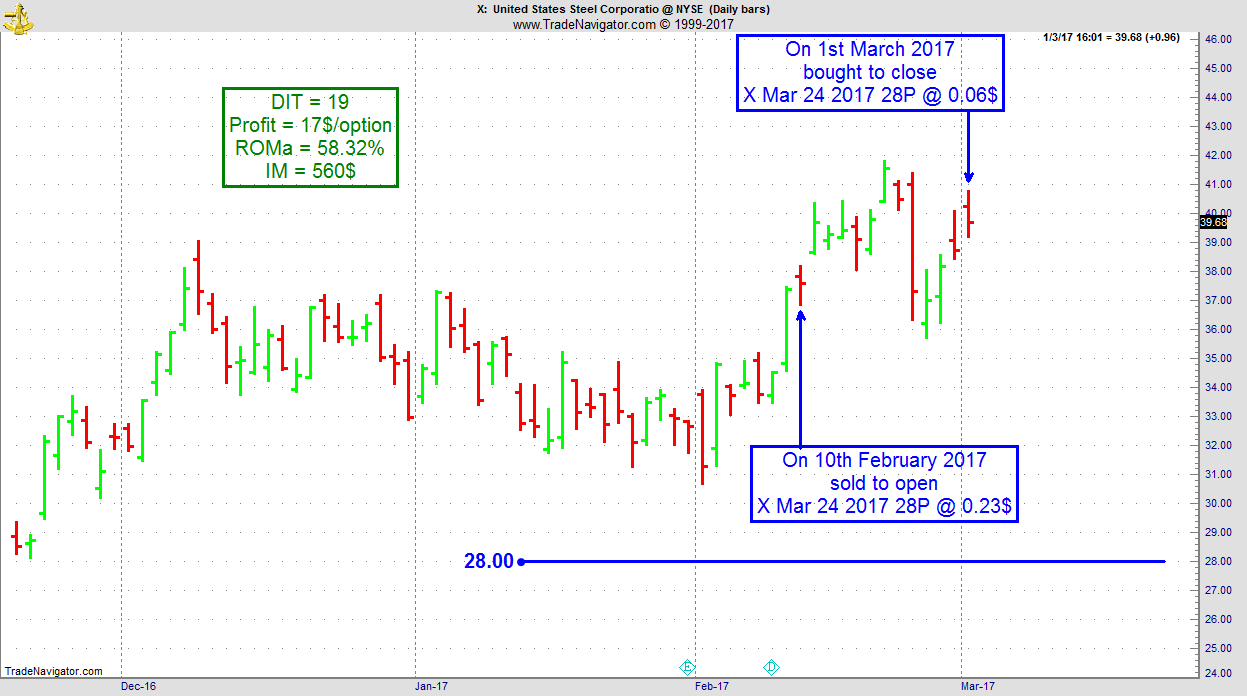
On 9th February 2017 we gave our IIG subscribers the following trade on X (US Steel). We decided to sell price insurance as follows:
On 10th February 2017, we sold to open X Mar 24 2017 28P @ $0.23, i.e. $23 per option sold, with 44 days to expiration, and our short strike below a major support zone and 25% below price action.
On 1st March 2017, we bought to close X Mar 24 2017 28P @ $0.06, after 19 days in the trade, for quick premium compounding
Profit: $17 per option
Margin: $560
Return on Margin Annualized: 58.32%
This trade was pretty safe in spite of overall very low implied volatility levels.
We have also added new types of trades for our IIG daily guidance since 2016, "no loss" propositions with unlimited upside potential, still using other people's money to trade.
To view previous published Chart Scan newsletters, please log in or click on "Join Us,"
shown above, to subscribe to our free "Members Only" section.
A WEALTH OF INFORMATION & EDUCATION:
Joe Ross-Trading Educators' popular free Chart Scan Newsletter has been published since 2004.
Note: Unless otherwise noted, all charts used in Chart Scan commentary were created
by using Genesis Financial Technologies' Trade Navigator (with permission).
Legal Notice and Copyright 2017 Disclaimer - Published by Trading Educators, Inc.
Chart Scan is a complimentary educational newsletter.
Learn all you need to know about our new Ambush Signals service during this presentation by Marco Mayer. What is the Ambush System, what's the idea behind it and how does Ambush Signals make trading Ambush so much easier!
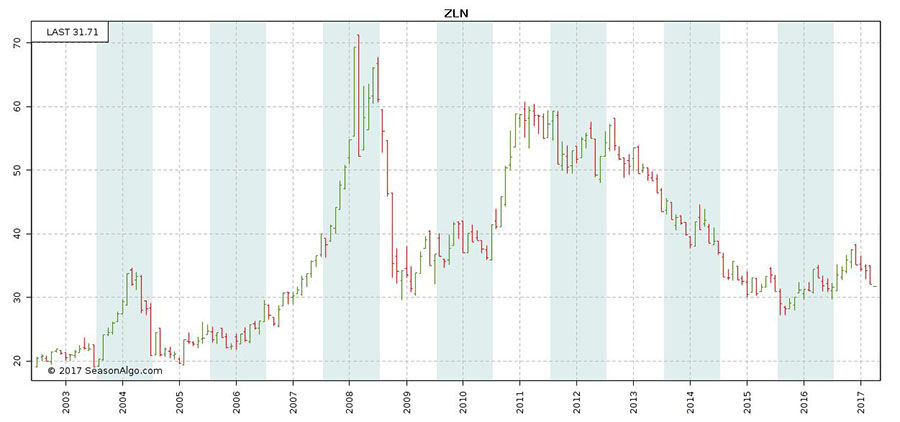
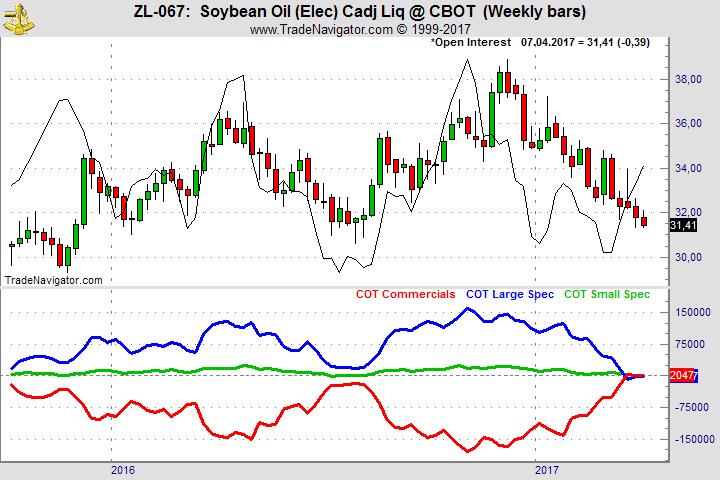
Today, I want to have a closer look at the Soybean Oil chart. As you can see from the chart below, Soybean Oil has been moving lower for several months and is coming close to the level around 30. This level is interesting to me because ZL bounced off of this level a few times in the past. Will it do the same this time? I have no idea, but we will see.
In addition, the commercials have turned to net long the first time for a long, long time. The last time commercials were net long was in June 2014.
Both, the long term chart and the COT chart, together with good Implied Volatility put Soybean Oil on my watch-list. I am now waiting to see what happens around 30 or 31 before I jump in to sell puts probably using the July contracts.
Learn from us by receiving daily detailed trading instructions on how to manage this trade and others! Click the below link for more information:
Chart Scan with Commentary - Trading options and futures combinations
by Master Trader Joe Ross
Author, Trader, Trading Mentor, and Founder of Trading Educators, Inc.
Option traders trade options, futures traders trade futures, "and never the twain shall meet." But why is it that way? Why are people who are trading options and futures combinations so rare?
Years ago, I set out to discover why we don’t see people trading both options and futures in order to get the best features of each. What I discovered is that option traders were scared of the underlying futures, and futures traders were afraid of the complexities of trading options. The result was that I couldn’t find a single person who was trading options and futures simultaneously.
What I have trouble understanding to this day is why traders don’t see that combining trading options and futures makes the trading of both much easier, and gives them the best of both worlds. What do I mean by that?
Let me give you an example that will show you why trading options and futures within a single strategy is a whole lot easier than trying to do the job using either options or futures separately.
Let’s say you want to create what is known in option trading as an "Option Box."
To create an Option Box, you must first create a synthetic long or short position. In this example let’s say you think prices will rise, so you want to be artificially long. You buy a call three strike prices distant from the current price of the futures, and you sell a put two strike prices distant from the current price of the futures. You do this only if you can achieve a satisfactory credit in your account for doing so.
Since we are talking here about trading options and futures, at the time we complete both transactions, we are synthetically long futures. (This same thing can be done with stock shares, CFDs, or Forex pairs.) Being synthetically long, we are now vulnerable. In the event that futures prices fall, we would be in trouble.
How would a straight options trader protect from the possibility of prices falling? Typically, the trader would buy an option at a strike price more distant than the one he just sold.
However, doing that would probably create two problems:
Buying the more distant strike price for protection could or probably would eat up all or most of the premium credit earned by entering the position to begin with.
The more distant strike price might involve more risk than could be had by protecting another way.
What is another way? The trader trading options and futures could simply place an open-order, good-till-canceled sell stop in the futures, anywhere in front of or behind the strike price of the option sold, thereby more closely tailoring the amount of risk he is willing to take. There are even more benefits to this strategy:
The open order short futures has zero costs associated with it. It is a free hedge against the possibility of falling prices.
There is no margin requirement for the short futures unless it is filled.
There are no commissions to be paid until the short futures is filled.
There are no Deltas to worry about because the futures position is always at full Delta and cannot decline from full Delta.
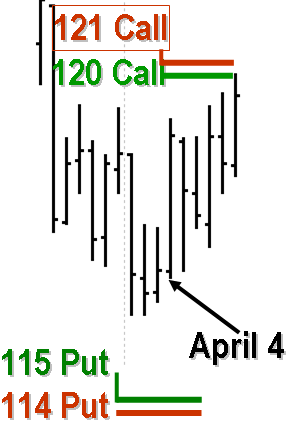
When trading options and futures with the objective being to create an Option Box, the trader now needs to close the box as quickly as possible. To accomplish that, he creates another synthetic futures position. This time he needs to sell a call and buy a put to become synthetically short futures. The trader needs to sell a call further distant from the call he bought, and buy a put closer in than the put he sold. And just as with the initial position, he should attempt, if possible, to accomplish the transaction with an additional credit to his account.
With the box closed, it is impossible to lose. By trading options and futures, the trader has opposing synthetic long and short futures, which now constitute a bear spread and a bull spread.
This strategy in combined trading has even further benefits:
The closed position carries a guaranteed win. The trader owns the inside of the box and is short the outside — he has a covered call and a covered put. The original open-order short futures position is no longer needed and can be discarded.
It eliminates the cost of having to buy one additional option that presumably would expire worthless or be sold for salvage value.
The second synthetic futures position can be put on with a debit as long as it does not use up all of the credit originally earned from the combination of trading options and futures.
An option model is not needed to trade this strategy (although a model could be helpful in extracting the most credit).
As long as prices remain inside the box created by short options, the trade will expire and the trader gets to keep the premium earned.
If prices break out of the box, in addition to the premium earned, the trader will enjoy a capital gain equal to the money earned between his long call and the more distant short call.
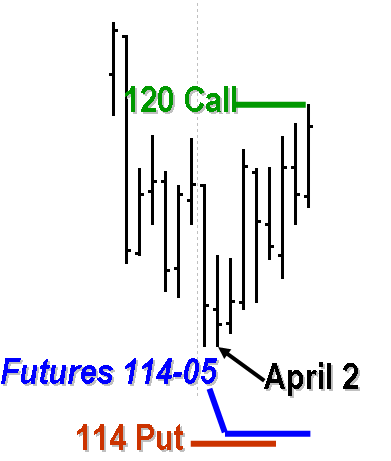
In trading options and futures combinations, an option box begins like this: Short a 114 Put, long a 120 Call, protected by an open-order sell stop in the futures.
In trading this combination, an option box ends like this: Short a Call, long a Call; long a Put, short a put.
This is just one example of the innovative way traders can trade using combinations of options and futures. There are many more examples and explanations included in the book I wrote entitled Trading Optures and Futions, which is, of course, about various combinations of trading options and futures.
Follow the above link to find out how you can learn more about trading options and futures to realize the best of both worlds.
by Master Trader Joe Ross
Author, Trader, Trading Mentor, and Founder of Trading Educators, Inc.
Trading discipline exists in two distinct parts:
Before your order is filled.
After your order is filled.
Let’s look at each of these categories, because both are tremendously important.
Trading Discipline Before Your Order Is Filled:
Here we are talking about all the things you do as a trader that require the consistency that comes from having good habits of preparation. Let’s look at good habits in terms of a series of questions:
Do you research your trades?
Do you study the markets?
Do you regularly engage in chart analysis, technical analysis, fundamental analysis - even all three?
Have you studied every kind of order available to you? Have you built strategies around the types of available orders, and have you come up with tactics -- ways to implement those strategies?
Have you thoroughly mastered your trading software and the platform from which you trade?
All of these are part of trading discipline, and still there’s more:
Have you practiced paper trading or trading on a simulator before launching a new strategy? This is especially necessary if you have never before traded.
Do you have plans for what you will do if your computer goes down in the middle of a trade? What will you do if your data feed stops working? What will you do if you inadvertently place a wrong order — or your statement shows an order you didn’t place, or doesn’t show an order you did place?
Taking care of the seemingly little things are all part of trading discipline, and I’m sure I haven’t covered everything. My purpose is to get you thinking!
Trading Discipline After Your Order Is Filled (Also called Self-Control).
There is a saying in martial arts that goes something like this: "If you are suddenly and unexpectedly attacked, you have two seconds in which to make a rational response." This response must come automatically, as part and parcel of who you are, and the response is gained through disciplined practice and repetition. Another way of describing this kind of trading discipline is to call it self-control.
All the discipline practiced before your order has been filled, including the trading discipline derived from practice and repetition, finally comes into play as self-control in a battle situation. The moment you are filled you are in battle, and if you are not fully prepared you will begin to behave emotionally. Without the discipline gained through practiced repetition resulting in self-control, you will begin to act irrationally, emotionally. Fear, greed, pride, guilt, and other emotions will come into play, causing you to fail to carry out your strategy or to implement the tactics you need for fulfillment of your trading plan.
How Do You Gain Discipline and Self-Control?
Many, many years ago, I was in the same situation in which many of you find yourself today. You are asking yourself, "How can I acquire the discipline and self-control I need to become a successful trader?
When I asked myself the very same question, I eventually discovered the solution. I began to chart my life. After all, chart reading was a huge part of my trading life. Chart reading was what I did every day. My entire world concept revolved around reading charts. Charts were one of the main ways through which I perceived the world around me.
There was another aspect to trading discipline that intrigued me. I had always heard that if I wanted to be a winning trader, I had to keep my losses small and let my winners run. Wow! Great idea, isn’t it? But no one ever showed me how to do it!
I was now confronted by two mountains. The first was how to chart my life, and the other was how to keep my losses small and let my winners run.
The answer to both seemed to come at the same time. By charting my equity, it became crystal clear to me as to how to keep my losses small and let my winners run.
Charting my life was somewhat more difficult. I had to think hard about which factors of my life most affected my trading. I had a trading life, but how was I to break it down into chartable pieces? And what about my emotional life, how did that affect my trading? And there were still other life categories that affected my trading: my relational life was one; my financial life was another; and my spiritual life was yet another.
Eventually I came up with two tools: one I called the "Life Index;" the other I called the "Equity Evaluator." I laboriously maintained these tools manually until the computer age. Both of these tools have now been digitized, which makes it extremely easy to enter the data and quickly see the patterns of results. Now both tools are available to assist you with your trading discipline: learn more about the"Life Index for Traders” and the “Equity Evaluator."
Developer: Joe Ross
Administration and New Developments: Philippe Gautier
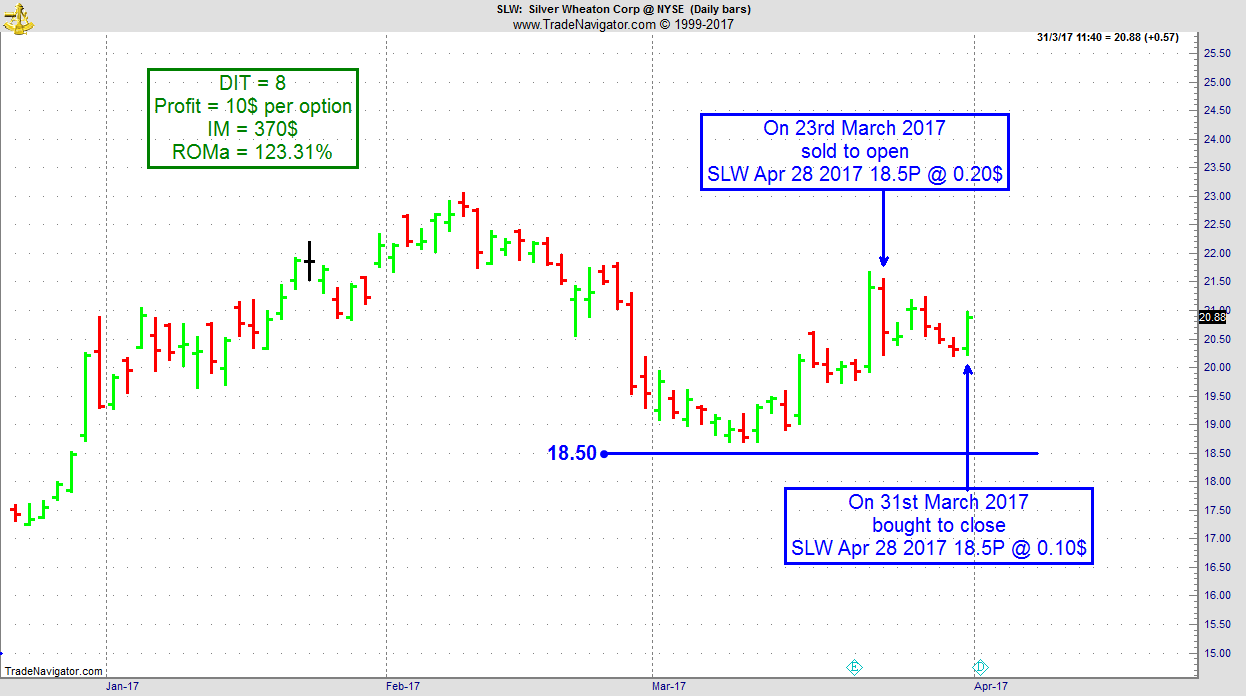
On 22nd March 2017, we gave our IIG subscribers the following trade on SLW, right after earnings. We decided to sell price insurance as follows:
On 23rd March 2017, we sold to open SLW Apr 28 2017 18.5P @ $0.20, i.e. $20 per option sold, with 35 days to expiration, and our short strike below a major support zone, about 14% below price action.
On 31st March 2017, we bought to close SLW Apr 28 2017 18.5P @ $0.10, after 8 days in the trade, for quick premium compounding.
Profit: $10 per option
Margin: $370
Return on Margin Annualized: 123.31%
This trade was pretty safe in spite of overall very low implied volatility levels.
We have also added new types of trades for our IIG daily guidance since 2016, "no loss" propositions with unlimited upside potential, still using other people's money to trade.
To view previous published Chart Scan newsletters, please log in or click on "Join Us,"
shown above, to subscribe to our free "Members Only" section.
A WEALTH OF INFORMATION & EDUCATION:
Joe Ross-Trading Educators' popular free Chart Scan Newsletter has been published since 2004.
Note: Unless otherwise noted, all charts used in Chart Scan commentary were created
by using Genesis Financial Technologies' Trade Navigator (with permission).
Legal Notice and Copyright 2017 Disclaimer - Published by Trading Educators, Inc.
Chart Scan is a complimentary educational newsletter.
One of the most important concepts to understand in trading is what it actually means to have an Edge in the markets.
First of all, when we talk about an edge in trading, we mean a statistical edge. A good example of a statistical edge is the casino. If you play Roulette, the casino will have an edge, the "house advantage". This will make sure that the casino is going to make money in the long run. Everyone who plays there has a disadvantage but it doesn't mean you cannot win there once in a while. You might have luck sometimes, but that casino edge will always make sure the house makes money, and you lose it in the long run, due to the law of large numbers.
That same law of large numbers is of course also at work in trading which is why it's so important to understand this concept.
If you're trading without an edge (with a random entry for example), you'd expect to have about 50% winning and 50% losing trades in the long run. Which is exactly what's going to happen if you trade often enough to allow the law of large numbers to do its job.
The same way as you can be lucky in the casino, you can also be lucky in trading and you might actually make money in the short-term. You believe you have an edge, you start trading and you actually make money. You're up nicely after 6 months of trading and you think you finally got it. But then you give it all back again and you're exactly where you started wondering if your edge has stopped working. But the truth is you might never have had one in the first place, you might just have been lucky!
This happened multiple times during the first years of my trading career. I was trying to apply whatever method I just believed in (some chart/price action pattern for example), and after looking at a few samples on a price chart, I started trading it without having thoroughly backtested the method. This way I either made money once I started trading it, which of course reinforced my belief in the method and then lost it later on. Or I lost money right away and stopped trading the method shortly after. Which might have been a mistake, as I maybe didn't give the law of large numbers enough time to make money with the edge. In any case, shortly after I started looking for the next holy grail, and unfortunately, there's no lack of utterly useless trading methods on the internet/books/seminars and gurus who were willing to sell it to me.
In trading, there's no house advantage you have to overcome (unless you're trading against your broker), but there are trading costs, which means you actually start out with a disadvantage. The higher your trading costs, the larger this disadvantage will be. So you will lose money in the long run if you trade without an edge as you always will have to pay these trading costs. Truth is, to break even in trading, you already do need an edge to overcome trading costs.
The key point to take away from this is to understand that if you actually do have an edge in the markets, it's just that. You're now the casino, you have the advantage. You have the law of large numbers on your side. In the long run, you will win.
Does this mean you'll be able to predict the outcome of the very next trade you'll take? Will you know it's going to be a winner? No, the same way the casino doesn't know if it will make money in the very next round. Does it guarantee you that you'll make money within the next 10 trades? No, the same way the casino doesn't know it will make money on this table tonight. Could it happen that you get 5 losing trades in a row? Absolutely, the same way someone might double his money 5 times in a row playing roulette in your house.
If you manage to really understand and acknowledge this, your trading will become a lot easier. You'll stop trying to predict what a market will do, knowing that it's simply impossible to know and that the outcome of a single trade is a random event. This way you'll pay much less attention to individual trades and be more focused on the long run.
And that's the only way to succeed in this business. Have an edge, focus on the long run and ignore the noise in between. I hope this article helps you to do just that.
by Master Trader Joe Ross
Author, Trader, Trading Mentor, and Founder of Trading Educators, Inc.
Of all the setups available, the Traders Trick Entry is the only one that gets better with more people using it. That may sound strange, but it is true.
Most setups are effective only when limited to a few traders, but the Traders Trick Entry is quite different. The reason is the Traders Trick is designed to take advantage of the momentum of others—the more “others” the more effective the trick becomes.
The Traders Trick Entry has now been in use for over 30 years, and with use, it gets better and better. It is a setup that is so consistent, that many professional traders use it exclusively for their trade entries. The Traders Trick Entry (TTE) takes advantage of retracement turnarounds, and pre-breakout momentum.
TTE works in all markets and in all time frames. The primary consideration for the TTE to work is that there be enough room between the point of entry and the targeted breakout point to be able to earn a profit.
Through 20 years of global experience, by thousands of traders, TTE has been refined to a point that it possible to earn a living using only that single setup.
The Traders Trick Entry is not a mechanical system—in fact it is not even a discretionary method. It is a setup, pure and simple. As a setup, it is one way to implement two of the three primary formations of the Law of Charts. Those formations are 1-2-3 highs and lows, and Ross Hooks.
One of our associates here at Trading Educators, uses the TTE exclusively for trading stock options. A gentleman in South Africa uses it to trade futures on point and figure charts. We have a student who uses TTE exclusively to trade the financial markets. TTE is used by many to trade Forex. Another of our associates uses it to trade spreads on futures.
TTE can be, and is used, by traders who prefer candlestick charts, point and figure charts, range charts, tick charts and regular bar charts. It is completely independent of market or time frame because of the fact that it is the implementation of a physical law.
Just as the physical laws underlying the fact of electricity can be used to generate heat, light, and turn a motor, the physical laws underlying the Law of Charts can be used to produce profits.
The chart above is a weekly chart. It could be the weekly of anything that is chartable. The only way you know that this is a weekly chart is because I told you it is, and I have left off the identifying information on the chart.
Prices have dropped to a low noted by the number 1 point on the chart. From there prices rose to point number 2 and subsequently retraced to point number 3. The Traders Trick Entry Calls for a trade to be entered one tick, pip, bip, or X cents above the high of the bar labeled 3.
Of course, there is more to it than the simple explanation above. There are refinements that can be used to make the trick extremely effective. It is also important to know the market dynamics behind the trick, so that you have a complete understanding of how and why it works.
The free eBook you received when signing up igningAt our website, we have an elementary explanation of the Traders Trick Entry. For a more complete explanation, and to see it in action you can purchase our webinar "Traders Trick Advanced Concepts," or sign up for private one-on-one tutoring with Joe Ross. You can trade for a living with the simple setup Traders Trick Entry. Traders all over the world are using it. Don’t be left out.
Trading Article - Maintaining Discipline: When Past Choices Influence Future Decisions
by Master Trader Joe Ross
Author, Trader, Trading Mentor, and Founder of Trading Educators, Inc.
Traders and investors have difficulty "letting their profits run." When you see your investment increase in value, it's hard to avoid selling early to lock in profits. But not every trade goes your way, so when you come upon a trade that does produce a profit, it's vital for your long-term success to optimize the profits for that particular trade. You must make more profits on your winning trades than you lose on your losing trades, but this is difficult to do if you consistently sell prematurely. Waiting for your price objective takes self-control. You must fight the urge to sell early. A thinking strategy that may help you increase your ability to maintain self-control when you need to suggest viewing economic decisions as "linked" in that the decisions you make on earlier economic choices influence the decisions you make on later economic choices.
How do you approach discipline when you trade? Do you think, "I'll sell early on this trade, but on future trades, I'll let my profits run." Is there harm in thinking that way? It may set a bad precedent. What you do early on may influence what you do later: If you sell early on some trades, you may tend to sell early on other trades. In an experiment with a simple thinking strategy, participants were told to think of a series of decisions as linked together. They were told that initial choices were good predictors of future choices. The choices they made concerned deciding on a smaller reward up front, or waiting for a larger reward later. For example, a participant might decide between one piece of pizza now and two pieces of pizza in a week. It's quite similar to taking a smaller profit early rather than patiently waiting to take a larger profit later. Some participants were asked to consider the advantage of putting off taking a smaller reward up front.
Results of the study showed that this simple thinking strategy worked. When people were reminded of the recurring nature of choices, and that they should show self-control early on, they were able to actually show more discipline and self-control when asked to make later economic decisions. These findings suggest that if you want to trade with discipline, it is essential that you maintain discipline at all times. Don't sell early, and think, "I'll hold on next time." The mind doesn't seem to work that way. You must show self-control early and on all decisions. So when you are about to sell early, stop! Remind yourself that the long term consequence of taking profits prematurely is that it will set a bad precedent. You won't be able to show self-control and restraint when you really need to. And in the long run, it will severely cut into your overall profits.
However, there is another way to handle trades—one that can give you the best of both worlds. The way we do it at Trading Educators is to take a small but quick profit as soon as possible, move to breakeven, and then allow the market to take you as far as it is willing.
Developer: Joe Ross
Administration and New Developments: Philippe Gautier
On 9th June 2016, we gave our subscribers a new type of trade on US Steel (X), which was showing accumulation on a pullback on the weekly chart.
We entered a "complex position", entered for a net credit (still working with OPM, i.e. other people's money, as usual), but with unlimited upside potential.
On 10th June 2016, we entered the trade for a credit of $1.70 (or $170 per position).
On 9th November 2016, we took partial profits on our long position.
On 7th December 2016, we took new partial profits on our long position and closed our short position.
On 13th March 2017, we took our profit on our last long position on a weekly trailing stop.
DIT = 277 days
Profit: $906.70 per unit
Average short strike = $15.68
Margin: $314
Return on Margin annualized: 380.96%
These are low maintenance, low stress trades with lots of upside potential. Our total profit was about 3 times our average margin requirement on this trade.
We presently have 22 of these trades opened, some of them with no margin requirements left.
To view previous published Chart Scan newsletters, please log in or click on "Join Us,"
shown above, to subscribe to our free "Members Only" section.
A WEALTH OF INFORMATION & EDUCATION:
Joe Ross-Trading Educators' popular free Chart Scan Newsletter has been published since 2004.
Note: Unless otherwise noted, all charts used in Chart Scan commentary were created
by using Genesis Financial Technologies' Trade Navigator (with permission).
Legal Notice and Copyright 2017 Disclaimer - Published by Trading Educators, Inc.
Chart Scan is a complimentary educational newsletter.
"Teach our students the truth in trading - teach them how to trade,"
and
"Give them a way to earn while they learn - realizing that it takes time to develop a successful trader."
Derivative transactions, including futures, are complex and carry a high degree of risk. They are intended for sophisticated investors and are not suitable for everyone.
There are numerous other factors related to the markets in general or to the implementation of any specific trading program which cannot be
fully accounted for in the preparation of hypothetical performance results, and all of which can adversely affect actual trading results.
For more information, see the Risk Disclosure Statement for Futures and Options.